Game Types
 Updated 15 hours ago
by
Collin Palmer
Updated 15 hours ago
by
Collin Palmer
Arcade offers seven template-based game formats, a Surprise Me option, and a fully custom game mode. Every game type supports leaderboard scoring based on correct answers and completion speed.
Multiple Choice
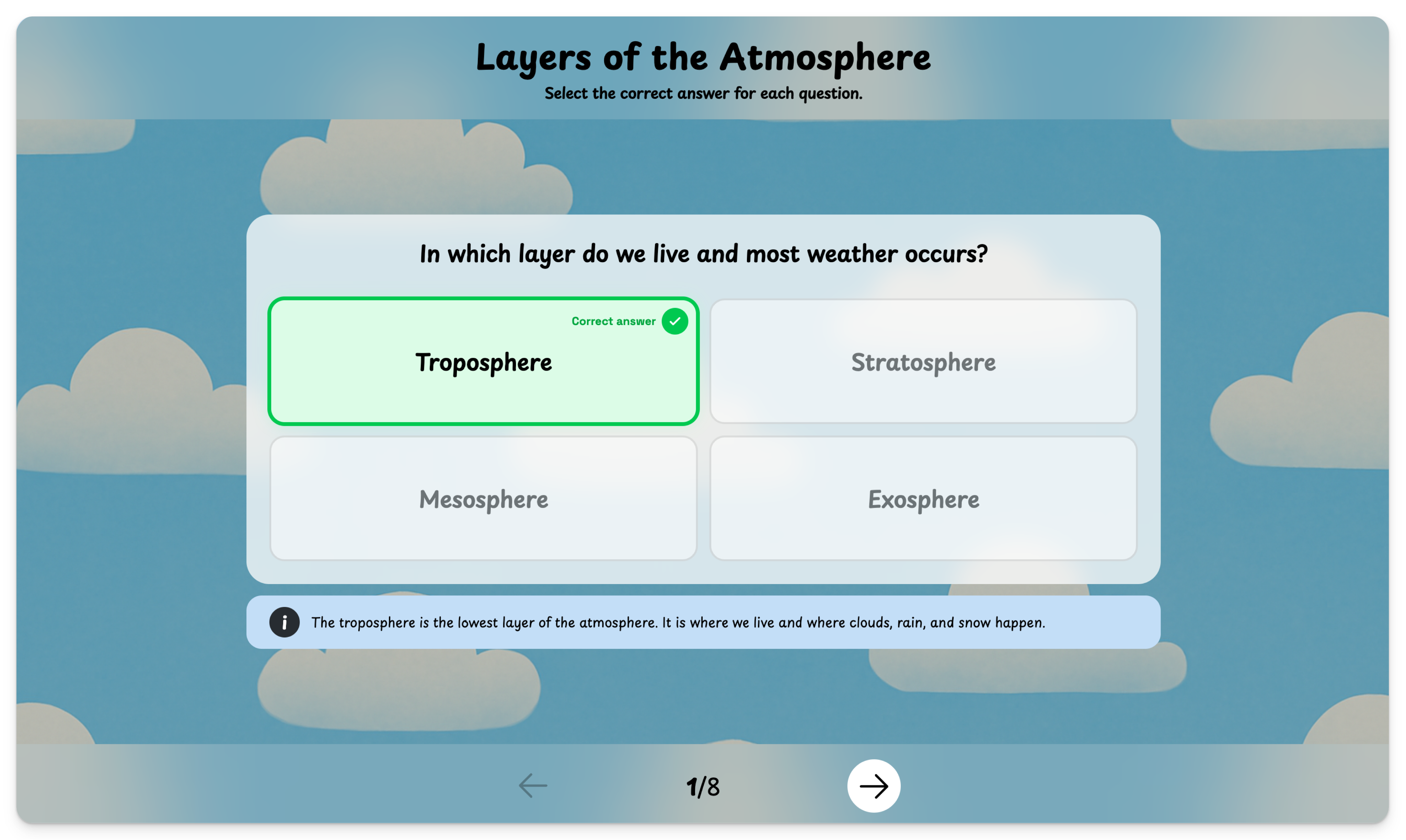
A classic quiz format. Players answer numbered questions by selecting from A/B/C/D answer options. Questions can include reading passages followed by comprehension questions. All questions appear on a single scrollable page, and players click Submit when they’re done.
Best for: Comprehension checks, reading passages, factual recall, test prep.
Matching
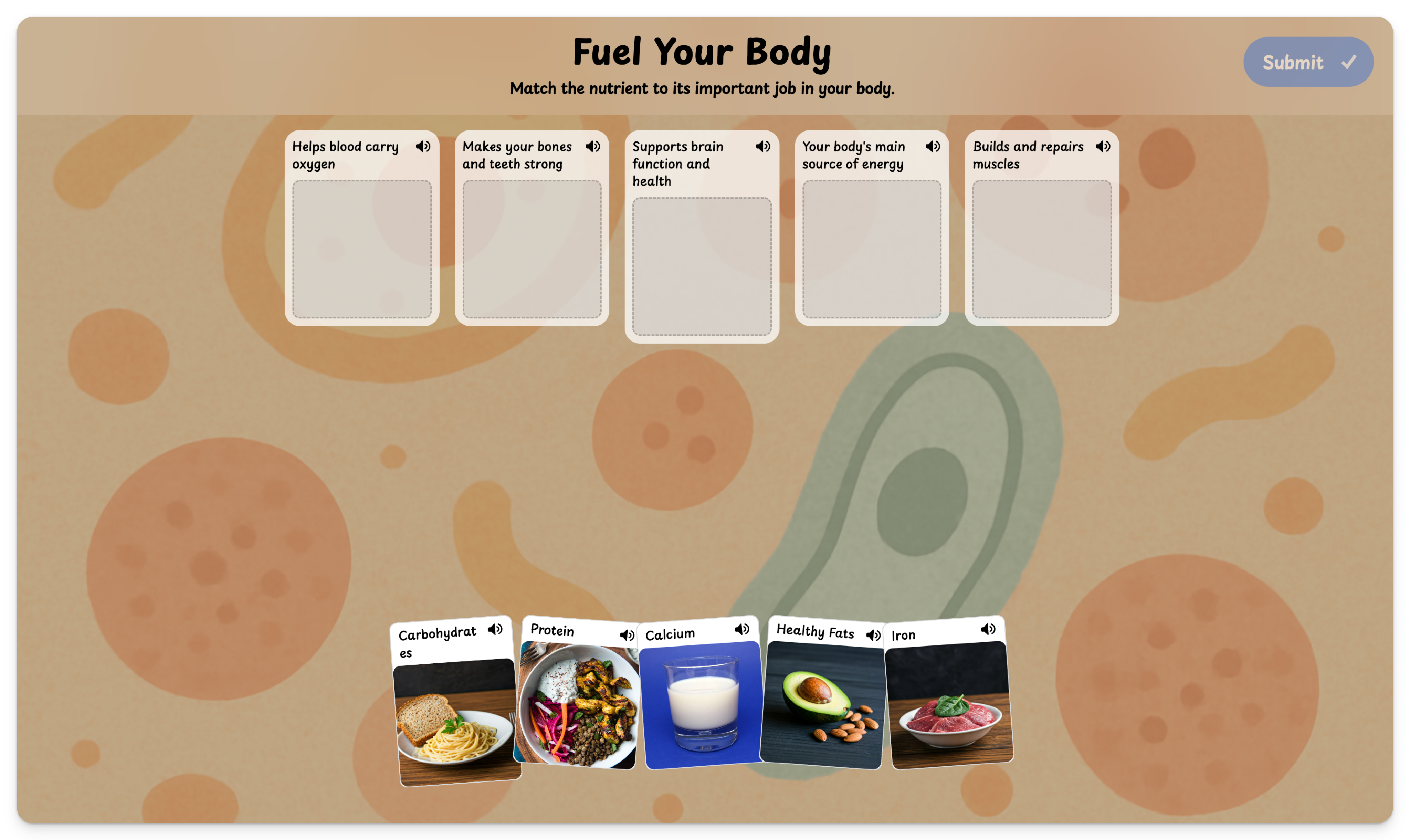
Players see a set of labeled slots at the top of the screen and a hand of illustrated cards at the bottom. Each card features an AI-generated image and a term. Players drag cards from their hand into the correct slot to match terms with their definitions or descriptions.
Best for: Vocabulary and definitions, cause and effect, concept pairing.
Flashcards
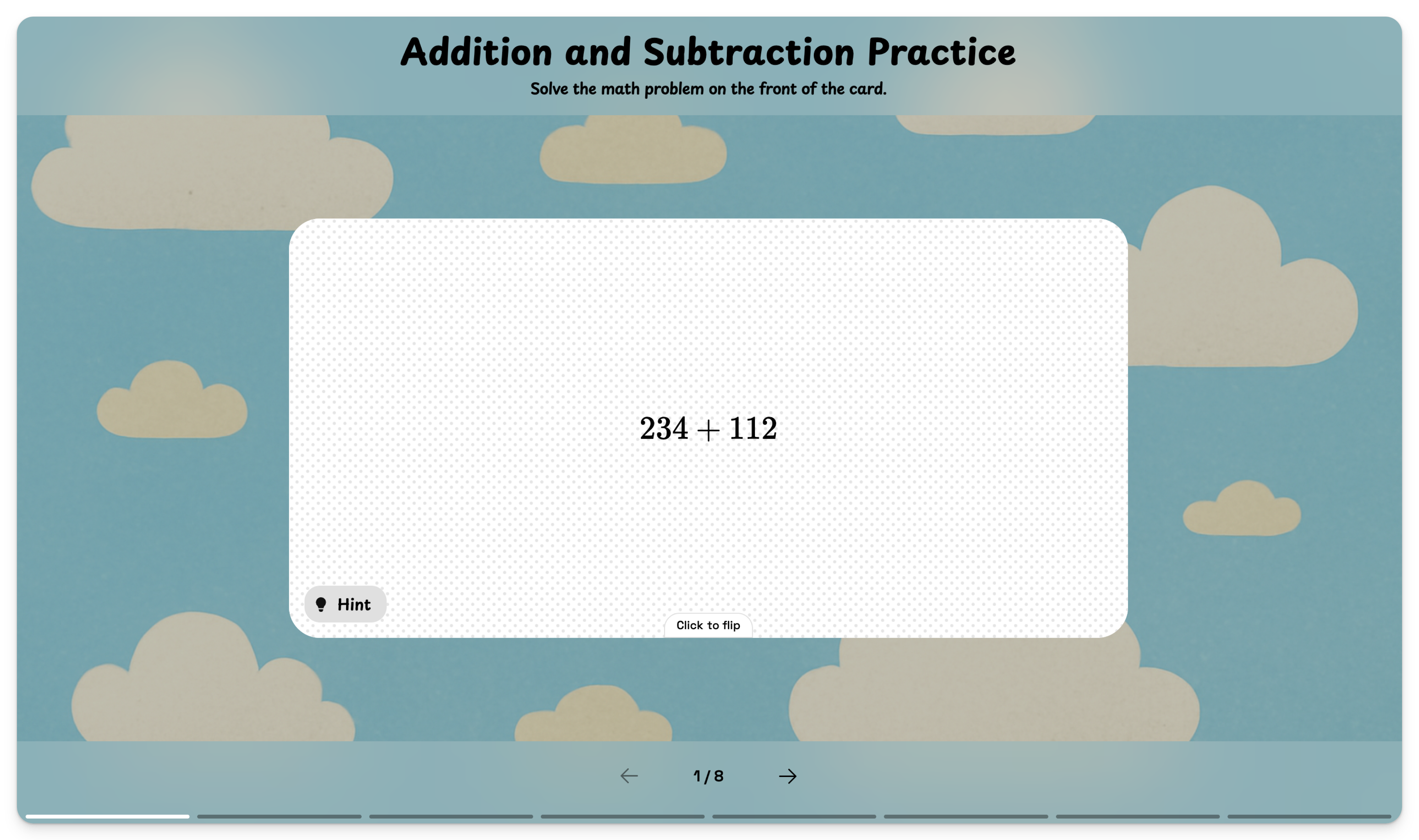
Digital flip cards for studying. Each card has a front and back — typically a term on one side and a definition, image, or explanation on the other. Players navigate through the deck using pagination controls. Some flashcards include audio playback for pronunciation or narration. Scoring for Flashcards is based on completion, so players are ranked by speed on the leaderboard.
Best for: Vocabulary, definitions, key facts, study review.
Memory Tiles
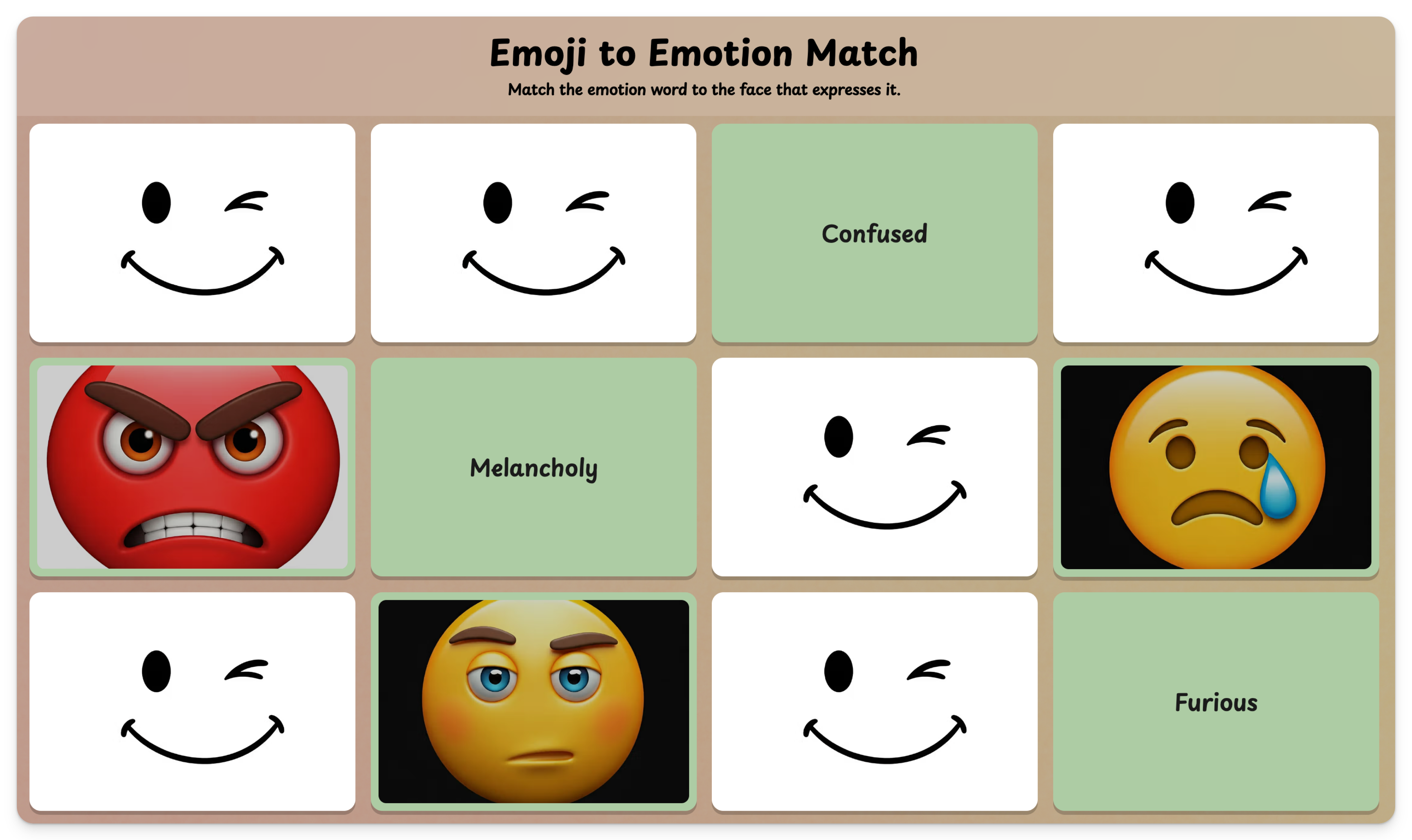
A grid of numbered tiles that players flip to reveal images underneath. The goal is to find all matching pairs. Players flip two tiles at a time — if they match, the tiles stay revealed. If not, they flip back over.
Best for: Visual association, vocabulary-image pairing, younger learners.
Sorting
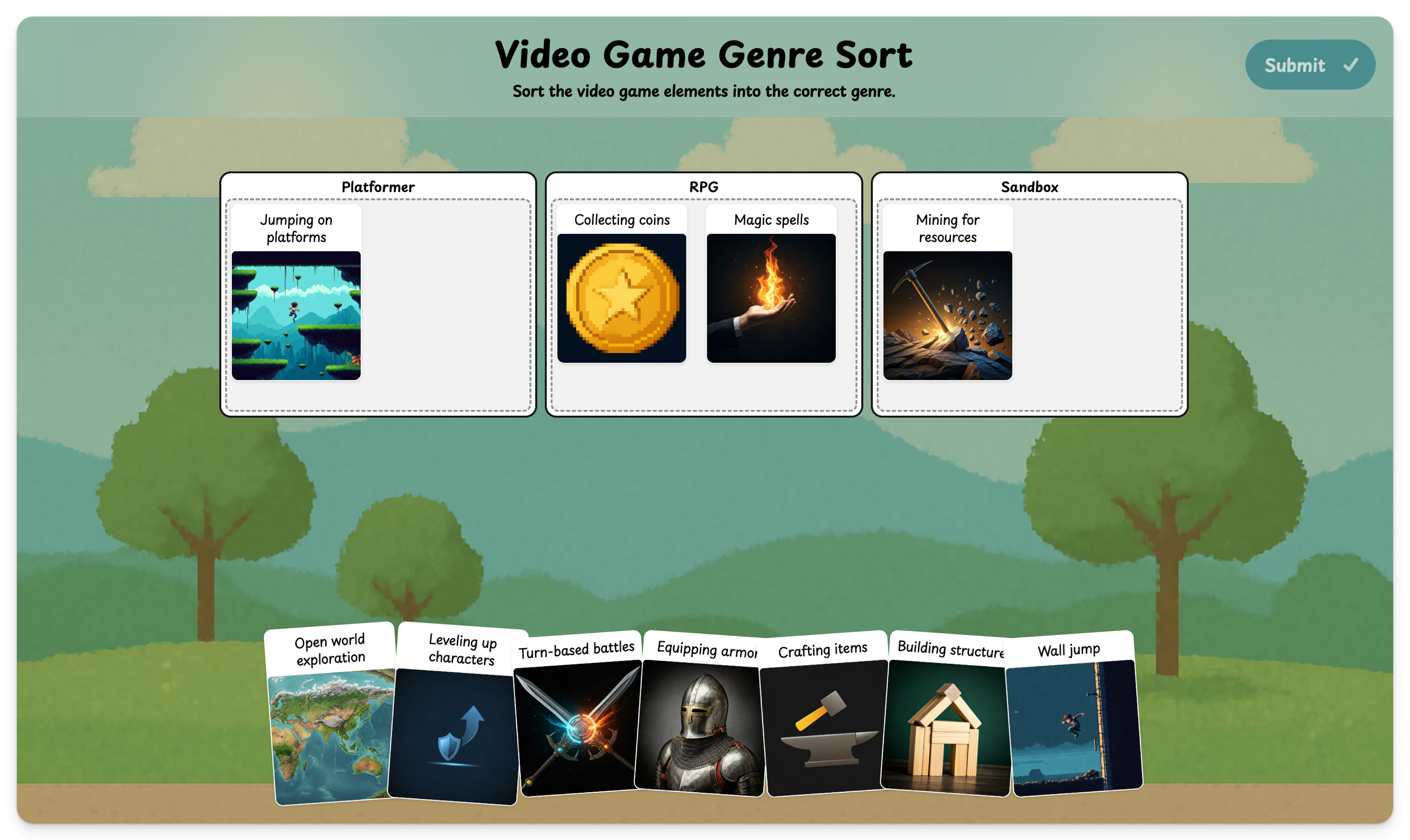
Players categorize items by dragging text cards into labeled category buckets. For example, sorting animals into “Mammals,” “Reptiles,” and “Birds,” or sorting story excerpts by narrative point of view.
Best for: Classification, categorization, comparing and contrasting, grouping concepts.
Sequencing
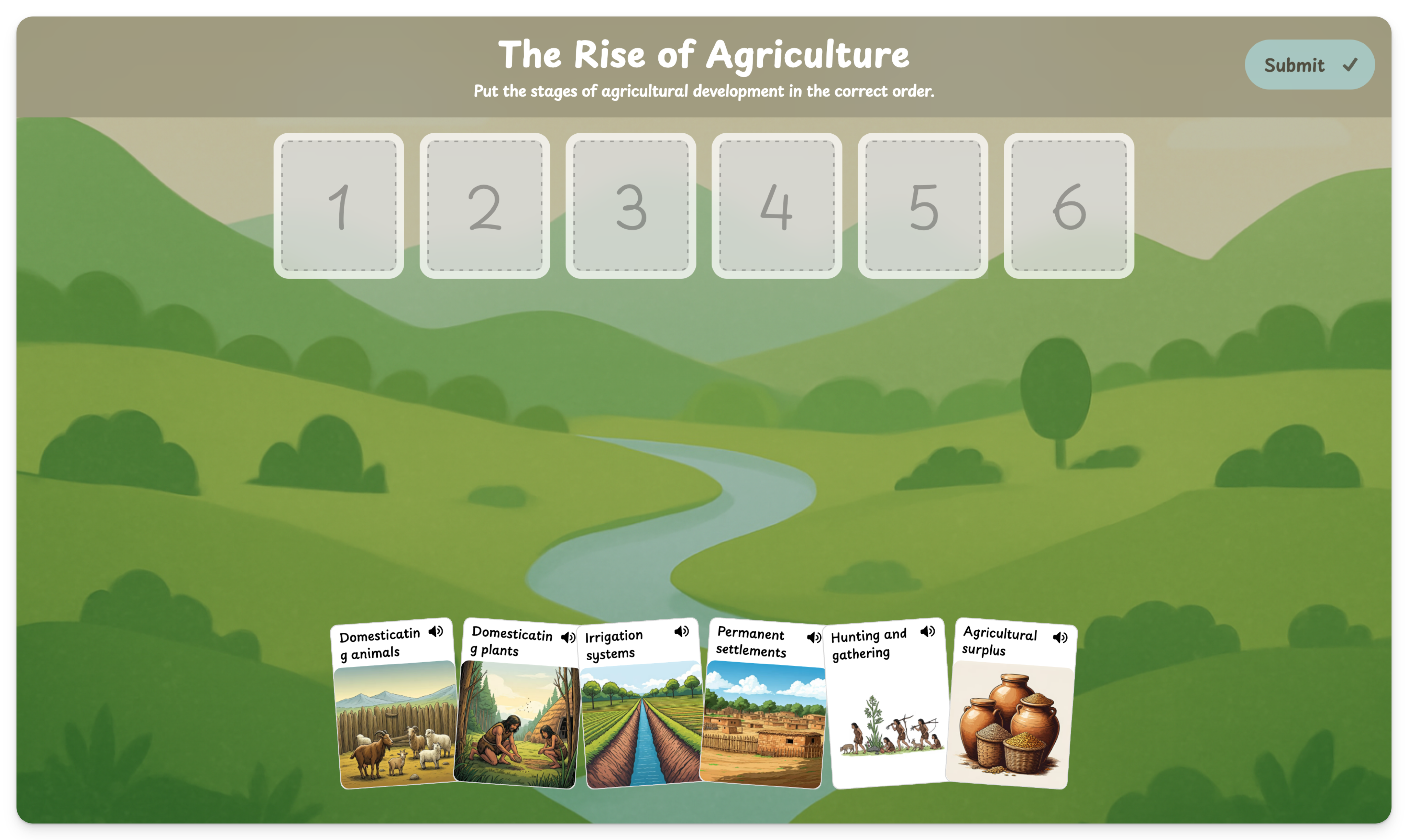
Players arrange events, steps, or items into the correct numbered order. Slots are labeled with sequence numbers and may include date or year labels. Cards feature both text and images, and some include audio playback icons for an auditory learning dimension.
Best for: Historical timelines, process steps, story ordering, cause-and-effect chains.
Fill in the Blank
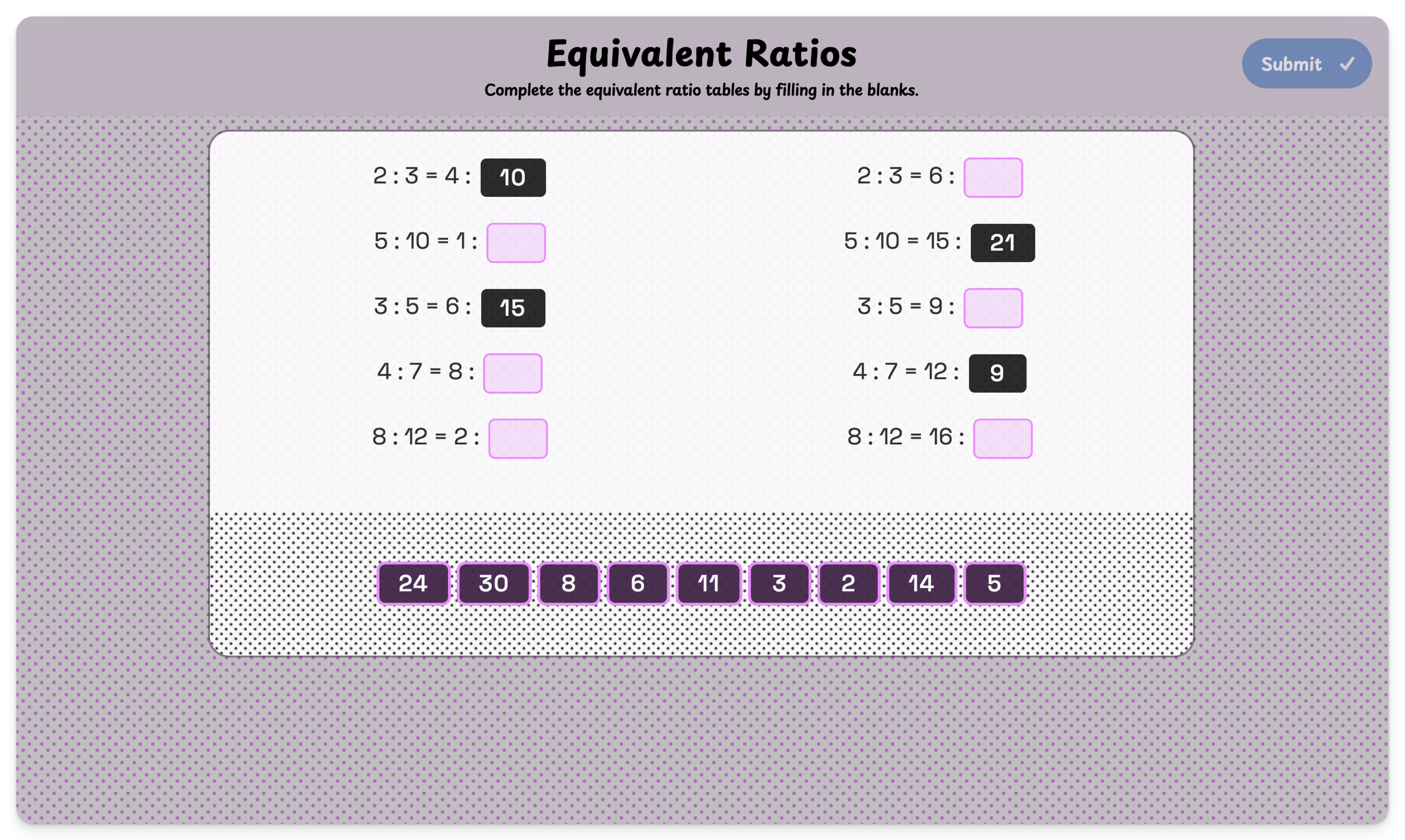
An interactive worksheet-style game. Sentences or equations are displayed with empty slots where key words or values should go. Answer chips are shown at the bottom of the screen, and players drag the correct chips into the blank spaces.
Best for: Sentence completion, math equations, grammar exercises, vocabulary in context.